Our Lore
A haunted island built for beautiful dread.
Horror-Bark was imagined as a destination where moonlit hospitality, theatrical fear, and island spectacle could belong to the same world. Guests arrive for the atmosphere first, then stay for the details: the crossings, the rooms, the rides, the rituals, and the stories stitched through every shoreline.
It is not a park that begins at the gate. It begins at first sight of the harbor, in the lanterns reflecting off black water, in the slow recognition that every path, tower, queue, and drawing room has been tuned to the same emotional register.
Built Around
Hotels, ferries, rides, games, and beach events
Mood
Gothic luxury with maritime unease
Promise
Memorable fear without breaking the spell
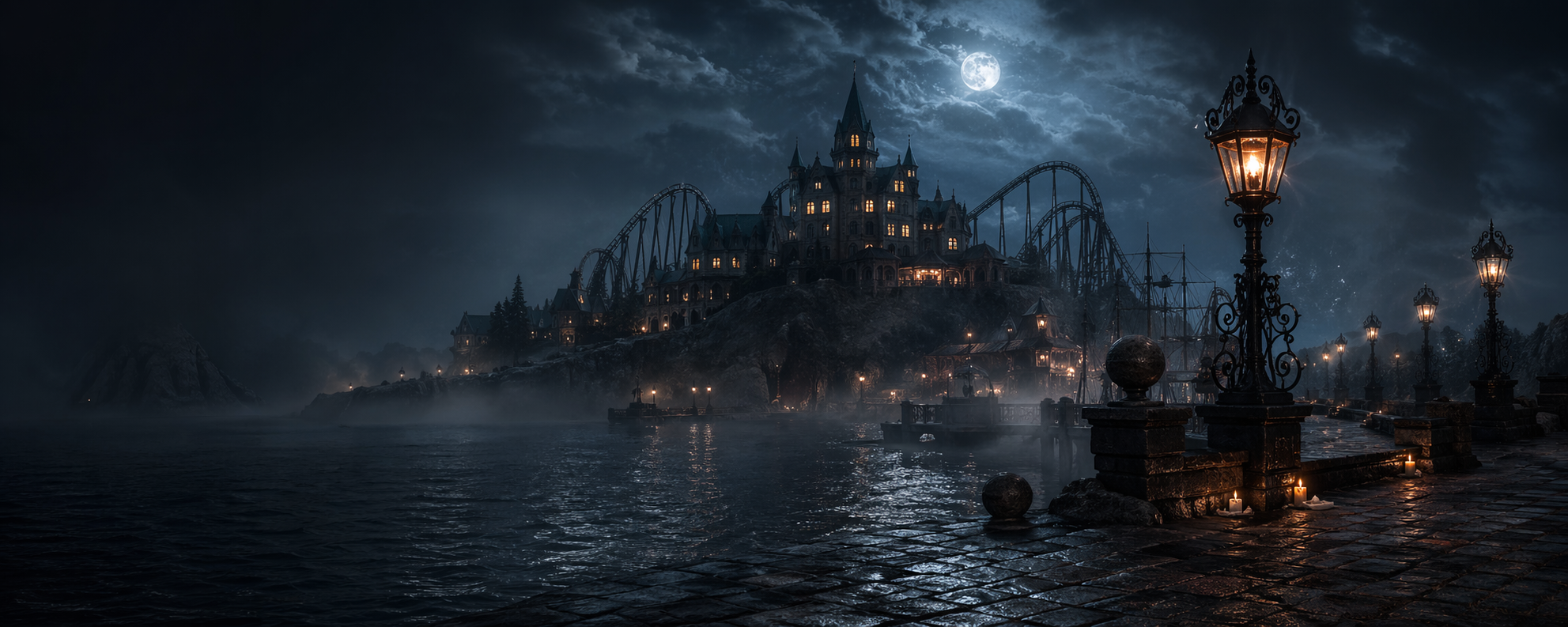
The Island Was Never Meant To Feel Ordinary
The park began as a response to safe, forgettable entertainment. Instead of flattening every experience into the same bright corridor, Horror-Bark treats the entire island as a single continuous set piece. The crossing should feel like an arrival. The hotel should feel like prologue. The shoreline should feel ceremonial. Even the queue should feel like a story beat.
That philosophy shaped everything that followed. Architectural silhouettes were pushed toward old-world grandeur, the waterline was preserved as part of the show, and the guest journey was designed to oscillate between elegance and unease rather than jump straight to noise.
The result is an island built around emotional pacing. There are places where the world tightens and places where it breathes. There are routes meant to disorient slightly before they resolve into spectacle. There are rooms that feel calmer than the shore outside them, and attractions that only work because the path leading toward them has already done half the storytelling.
How The World Is Structured
Arrival
The ferry crossing establishes the mood before the island is fully revealed.
Stay
Lodging acts as part of the atmosphere, not a separate utility layer.
Play
Rides, games, and events are curated as different expressions of the same mythology.
Afterglow
Guests should leave with specific scenes in memory, not just a list of activities completed.
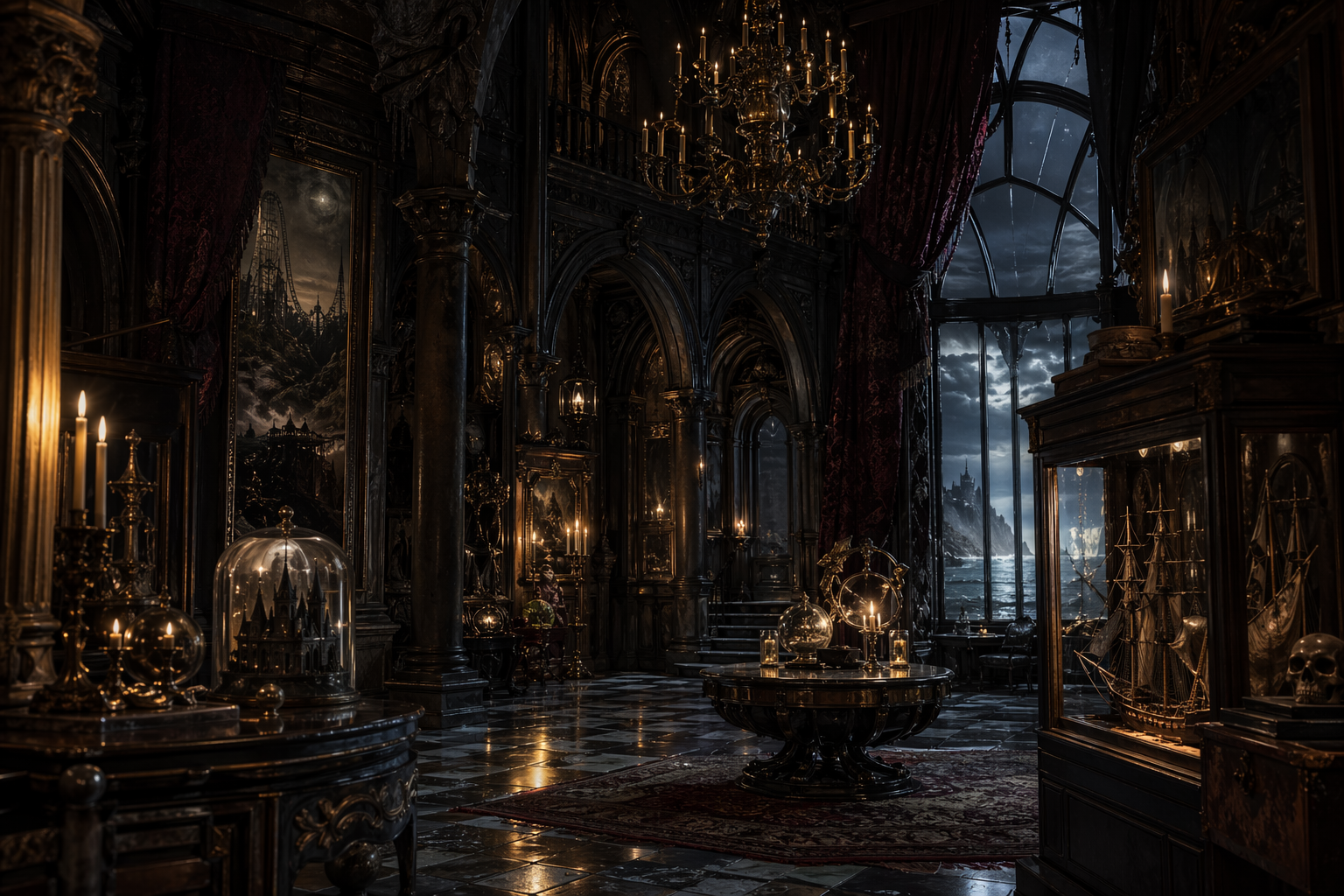
Designed Like A Set, Operated Like A Destination
Every public-facing space is meant to feel curated. Dark stone, lantern brass, velvet, sea fog, and antique glass are not decoration layered on afterwards; they are the visual grammar of the place. Horror-Bark works best when the guest can read the island instantly, even before they understand the story in words.
That restraint matters. Horror-Bark is not meant to feel cluttered with references or overloaded with explanation. The island works when every surface looks like it belongs, every pool of light feels deliberate, and every piece of ornament suggests history without having to announce it. The goal is immersion through coherence rather than excess.
Visual Language
Moon-silver highlights, amber practical light, wet black surfaces, and restrained ornament.
Operational Principle
Guests should always know where to go next without feeling pushed out of the mood.
What That Means In Practice
Readable signage, coherent booking flows, consistent theming, and enough narrative restraint that the world still feels believable.
Meet the Minds Behind the Mayhem
Horror-Bark is sustained by a small leadership core that treats atmosphere, logistics, and guest flow as equal parts of the same craft. Their work is less about shocking people moment-to-moment and more about making the island feel internally complete.
Even in absence, their disciplines are legible. Each one leaves behind a different kind of trace: the architecture of an idea, the evidence of staging, the concealed logic inside a mechanism. The island is full of signatures, but almost none of them are literal.
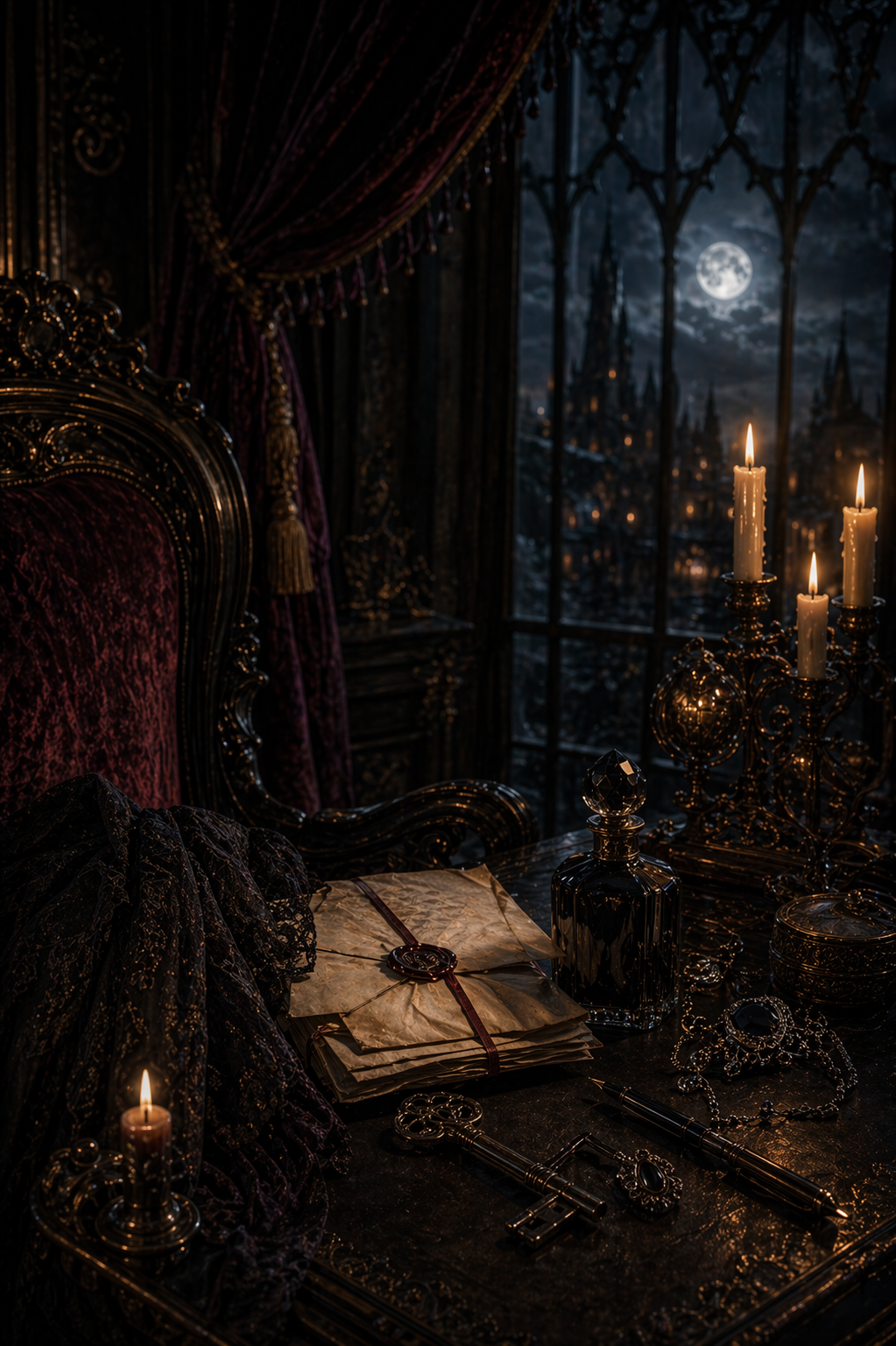
Visionary Founder
Evelyn Thorne
Keeps Watch Over
Narrative direction, guest mood, and the island-wide tone of the brand
Evelyn anchors the long-form worldbuilding behind Horror-Bark. Her hand is felt most strongly in the island’s pacing: what is revealed immediately, what is withheld, and how hospitality is used to make the fear feel more intimate instead of less.
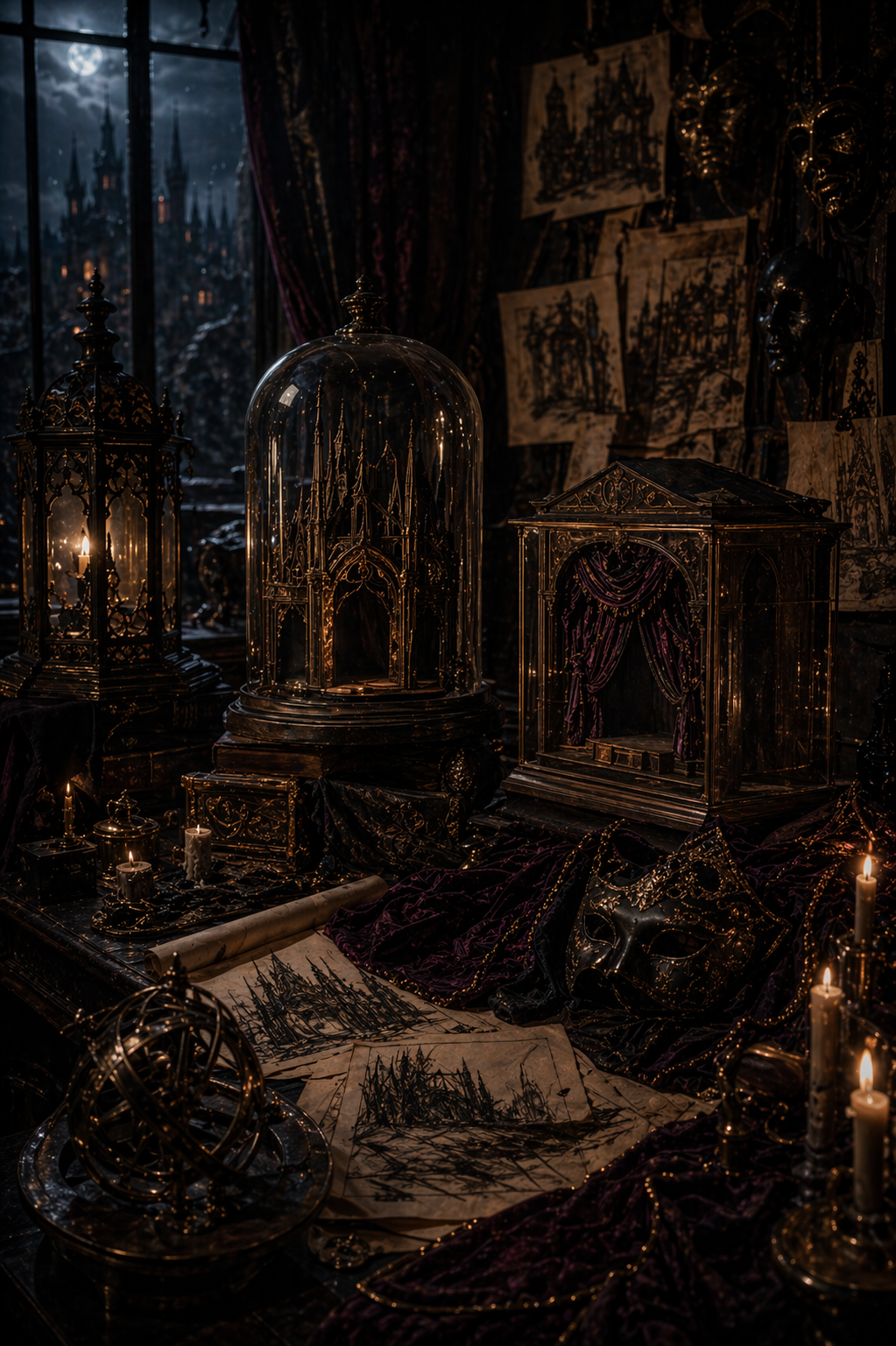
Creative Director
Silas Blackwood
Keeps Watch Over
Show design, visual standards, staging, and atmosphere continuity
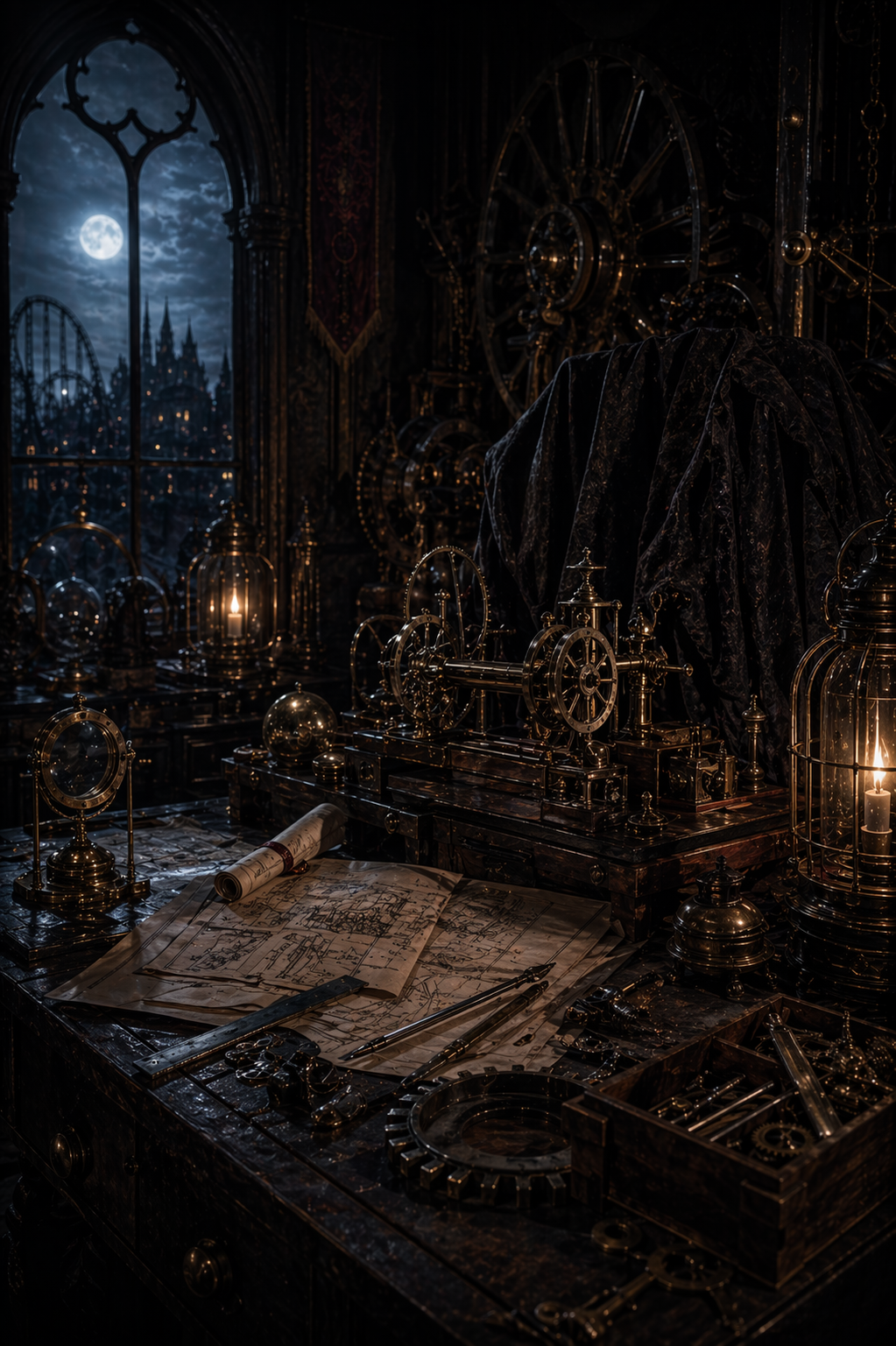
Silas shapes the ornamental language of the island, from drapery and lantern placement to how props, railings, and threshold spaces hold the same cinematic identity even when guests are moving quickly through them.
Lead Engineer
Jasper Crowe
Keeps Watch Over
Ride systems, reliability, and keeping the machinery invisible to the guest
Jasper handles the technical backbone that allows the island to feel effortless. His mandate is simple: the illusion should hold even when the operation underneath it is complex, timed, redundant, and constantly under pressure.
What We Refuse To Compromise
Atmosphere First
If a feature improves throughput but damages the mood beyond repair, it is redesigned until both can coexist.
Readable Operations
Guests should be able to move through bookings, crossings, and event access without friction breaking the illusion.
Safe Spectacle
The experience is built to feel unnerving, not careless. Safety is part of the design discipline, not a note added at the end.
Connect with the Unseen
Questions about the island, the stay, the crossings, or the events can be sent directly to the team. If you are planning a visit, the fastest path is still to explore the catalog and then reach out with the details that need a human answer.
Whether you are trying to understand the world before you arrive or simply decide which part of the island should be experienced first, the team can point you toward the stay, route, or event that best matches the mood you want from the visit.